
The substrate is the sheet itself, and it decides more about a wet wipe than most buyers expect: how soft it feels, how much liquid it holds, whether it tears in use, what it costs per wipe and which claims you can print on the pack. This guide covers the options we run most often and how to choose between them.
The main substrate types
Spunlace nonwoven
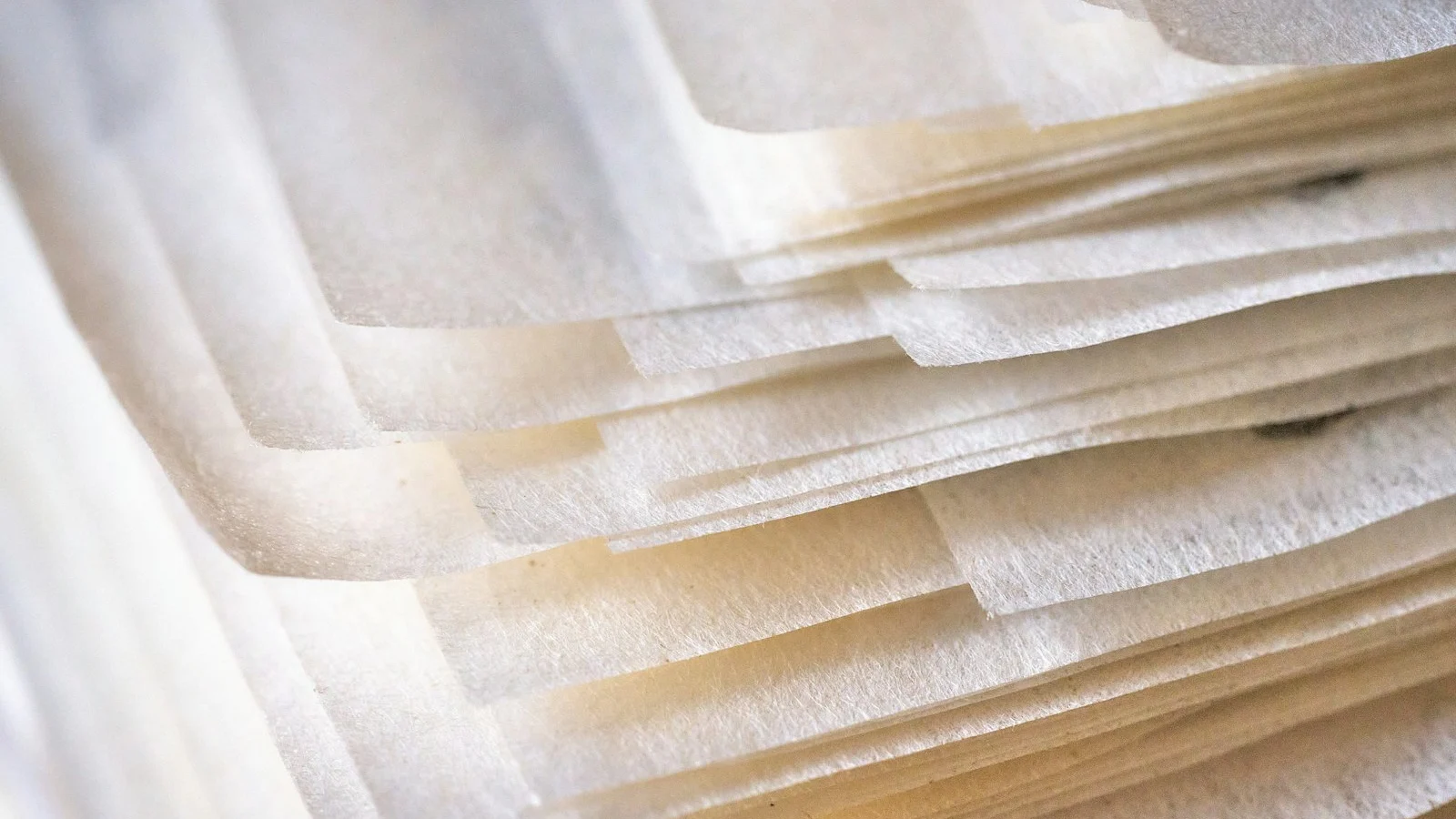
Spunlace is made by entangling fibres with high-pressure water jets, without glue. Most wet wipes on the market use it. A blend of polyester and viscose is the usual starting point: polyester adds strength and keeps the price down, viscose adds softness and absorbency. Changing the ratio is the main lever for cost and feel.
100% cotton
Cotton sheets are soft, absorbent and contain no synthetic fibre, which makes them a strong fit for premium baby and facial products. They cost more than spunlace blends and feel slightly less smooth when wet.
Viscose
Viscose is a regenerated cellulose fibre made from wood pulp. A 100% viscose sheet contains no plastic fibre and is the most common route to a plastic-free claim at a price below cotton.
Woodpulp composites and dispersible sheets
Pulp-based sheets are used for industrial wiping rolls, where absorbency per cost matters, and for moist toilet paper, where the sheet must break apart after flushing. Dispersible sheets are a separate category with their own testing; see the section on claims below.
| Substrate | Feel | Relative cost | Typical use |
|---|---|---|---|
| Polyester / viscose spunlace | Smooth, strong | Low | Baby, household, pet |
| 100% viscose | Soft, absorbent | Medium | Plastic-free baby and personal care |
| 100% cotton | Soft, natural | High | Premium baby, facial, cotton pads |
| Woodpulp composite | Absorbent, textured | Low to medium | Industrial rolls, shop wipes |
| Dispersible cellulose | Soft, weaker wet | Medium | Moist toilet paper |
Sheet weight
Weight is given in grams per square metre (gsm). Lighter sheets of around 40 to 45 gsm suit single sachets, pocket packs and glasses wipes. Mid weights of 50 to 60 gsm cover most baby, personal and pet wipes. Heavier sheets of 65 to 80 gsm are used for diaper changes, floors and industrial cleaning, where the sheet must hold more liquid and resist tearing.
A heavier sheet costs more per wipe but can let you lower the count per pack for the same cleaning result. We usually sample two weights side by side.
Surface pattern
The same fibre can be finished plain, with a pearl (dotted) pattern or as mesh. Plain sheets feel smoothest on skin. Pearl patterns add bulk and pick up dirt better, which suits household and pet products. Mesh and textured sheets scrub harder and are used for kitchen and hand-cleaning wipes.
Matching substrate to product
- Baby wipes: 50 to 65 gsm spunlace for value lines; viscose or cotton for plastic-free or premium positioning.
- Household cleaning: textured spunlace for kitchens, thick sheets for floors, low-lint sheets for glass.
- Medical: medical-grade spunlace or nonwoven, chosen together with the liquid and the registration path.
- Industrial: reinforced spunlace or woodpulp composites that hold up under solvents.
Substrates and on-pack claims
Claims such as plastic-free, biodegradable or flushable depend on the substrate and, in most markets, on test evidence. A plastic-free claim needs a sheet without synthetic fibre. A flushable claim needs dispersibility testing to the method your market recognises. Decide on the claim first, then choose the substrate that supports it, and ask for the matching test report with your quotation.
If you are unsure, send us your product idea, target market and target price. We recommend two or three substrates with prices and send samples of each.